
Mandalay
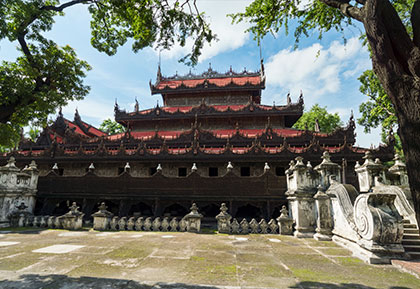
Mandalay, known as “The Bejeweled Site” and an auspicious heartland of Myanmar culture, is the country’s second-largest city, located 445 miles (600 kilometers) north of Yangon along the Ayeyarwaddy River. Founded in 1857 by King Mindon as the new capital of the last independent Burmese kingdom, Mandalay remains Myanmar’s richest historical landmark after Bagan.
The city abounds in historical sites, cultural memorials, Buddhist edifices, and traditional arts and crafts. It is home to craftsmen who continue centuries-old practices, from wood carving and marble sculpture to bronze casting, gold beating, silk weaving, and tapestry work. Mandalay is very much a city where the past lives on, offering a unique cultural experience to travelers.
With a population of around 1.5 million, Mandalay is also a commercial hub, connecting trade routes to China in the east and India in the west.
Must-See Highlights in Mandalay
Mandalay, Myanmar’s second-largest city and cultural heart, is home to a wealth of religious and historical sites. Key highlights include Maha Muni Pagoda, housing one of the country’s most revered Buddha images, and Kuthodaw Pagoda, famed for the “world’s largest book” of stone inscriptions. Visitors can also explore Sandamuni Pagoda, built in 1874 and later restored, and ascend Mandalay Hill for panoramic views of the city, the Irrawaddy River, and surrounding plains. Nearby attractions enrich any visit: Amarapura, with its iconic U Bein Bridge spanning Taungthaman Lake; Kaungmudaw Pagoda, one of Southeast Asia’s largest stupas; and Mahagandayon Monastery, where hundreds of novice monks gather daily, offering insight into Myanmar’s Buddhist traditions.