
Siem Reap
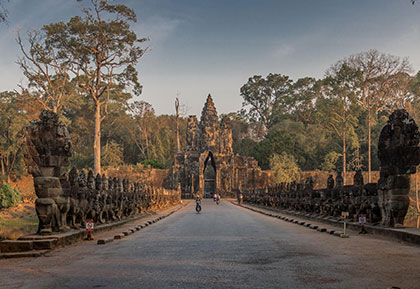
Angkor Archaeological Park – UNESCO World Heritage
Located just outside Siem Reap, Angkor Archaeological Park spans over 400 square kilometers and preserves the remains of several capitals of the Khmer Empire (9th–15th centuries). Renowned for its unrivaled masterpieces and unique architecture, it is Southeast Asia’s most significant archaeological site. Visitors can explore the Small Circuit, Big Circuit, and venture further to more remote temples and cultural treasures.
Small Circuit (approx. 17 km)
The Small Circuit of Angkor takes visitors through a rich tapestry of Khmer history and architecture. Highlights include Angkor Wat, the crown jewel and largest religious monument in the world, and the South Gate of Angkor Thom, famously lined with gods and demons. Within Angkor Thom, the Terrace of the Elephants and the Terrace of the Leper King showcase elaborate royal carvings, while Bayon Temple captivates with its serene smiling stone faces. Other gems include the restored pyramid Baphuon, the towering unfinished Ta Keo, the atmospheric Ta Prohm with its massive tree roots, and the quiet labyrinthine Banteay Kdei. The circuit culminates at Phnom Bakheng, the original temple-mountain, where sunset rewards visitors with breathtaking views over Angkor Wat and the surrounding temple landscape.
Grand Circuit (approx. 26 km)
The Grand Circuit offers a journey through some of Angkor’s most atmospheric and unique temples. Preah Khan impresses with its vast scale, a harmonious blend of restored structures and jungle overgrowth. Neak Pean is a serene island temple historically used for healing rituals, while Pre Rup rewards visitors with panoramic sunset views over the surrounding countryside. Along the route, Ta Som captivates with a giant tree embracing its eastern gate, and the Angkor Thom North Gate showcases monumental smiling faces at each cardinal point. The circuit concludes at East Mebon, a striking temple-mountain once surrounded by water, adorned with massive elephant statues that reflect the grandeur of the Khmer Empire.
Remote temples
Beyond the main circuits, several lesser-visited temples and cultural treasures await discovery. The Roluos Group including Bakong, Preah Ko, Lolei, and Prasat Prei Monti offers an early glimpse of Khmer architecture in a peaceful rural setting. Banteay Srei, the “jewel of Khmer art,” impresses with its intricate pink sandstone carvings, nestled near the Kulen Mountain range. Kbal Spean, the River of a Thousand Lingas, reveals thousands of sacred carvings beneath a flowing river, accessible by a short jungle trek. Nearby Phnom Kulen National Park combines waterfalls, jungle trails, and sacred sites for a journey blending nature, history, and spirituality.
Angkor Wat Temple
The crown jewel of Cambodia and the largest religious monument in the world, Angkor Wat is an enduring symbol of Khmer ingenuity and devotion. Built in the early 12th century by King Suryavarman II, it was originally a Hindu temple dedicated to Vishnu before being converted to a Buddhist site. Its harmonious composition, towering five spires, and intricate bas-reliefs make it the largest religious monument in the world. Sunrise over Angkor Wat is a magical experience, offering breathtaking views for all visitors.
Angkor Thom
Angkor Thomis the grand walled city built by King Jayavarman VII, was the last capital of the Khmer Empire. Its massive gates, flanked by 108 statues of gods and demons, lead to monuments such as the Baphuon, the Terrace of the Elephants, and the Bayon Temple, famous for its 216 serene stone faces.
Ta Prohm, also known as the “Tomb Raider” temple, is celebrated for the giant tree roots that engulf its ruins, preserving its mysterious, jungle-bound charm. Banteay Srei, the “jewel of Khmer art,” is renowned for exquisite pink sandstone carvings that depict Hindu mythology with astonishing intricacy. Preah Khan offers a sprawling, atmospheric complex where restored structures intermingle with overgrown vegetation, providing a glimpse into the intellectual and religious life of the empire.
Other noteworthy temples include Neak Pean, a serene island sanctuary for healing rituals; Pre Rup, a striking pyramid-temple popular for sunset views; and the Roluos Group, which includes Bakong, Lolei, Preah Ko, and Prasat Prei Monti, representing some of the earliest Angkorian temple architecture. Together, these sites capture the architectural brilliance and spiritual depth of the Khmer civilization.
Must-See Highlights in Siem Reap
In Siem Reap town, visitors can enjoy a lively mix of culture, shopping, and leisure. The Night Market is a bustling evening bazaar offering local handicrafts, street food, and colorful Khmer-inspired fashion, while Pub Street comes alive with bars, cafes, and restaurants serving both Cambodian and international fare. Old Market (Psar Chas) is the heart of the city’s shopping scene, where fresh produce, souvenirs, and handmade crafts give a colorful glimpse into daily life. The Royal Residence Garden offers a serene escape, shaded by century-old trees and dotted with statues. The Siem Reap River and Riverside Promenade provide picturesque spots for photography, leisurely walks, and sunset views with riverside cafes and performances. For cultural immersion, Artisans Angkor preserves traditional Khmer crafts in wood, stone, silk, and lacquer, and a traditional Apsara dance performance brings ancient Khmer mythology to life with graceful movements and shimmering costumes.
Places of interest around Siem Reap
Travelers can explore both cultural and natural attractions. Preah Dak Village is a charming handicraft village known for palm sugar production, traditional Cambodian snacks, and local handicrafts. Roluos Market, on the way to Kompong Phluk, offers a vibrant slice of rural life where villagers trade fresh produce, spices, and handmade goods. Kompong Phluk is a stilted fishing village set among flooded mangroves. Other floating villages, including Chong Kneas, Khleang, and Mechrey, showcase traditional lake life and provide peaceful settings to observe local fishing culture and birdlife. Tonle Sap Lake, Southeast Asia’s largest freshwater lake and a UNESCO Biosphere Reserve, transforms dramatically with the seasons, creating a fascinating landscape to explore.